
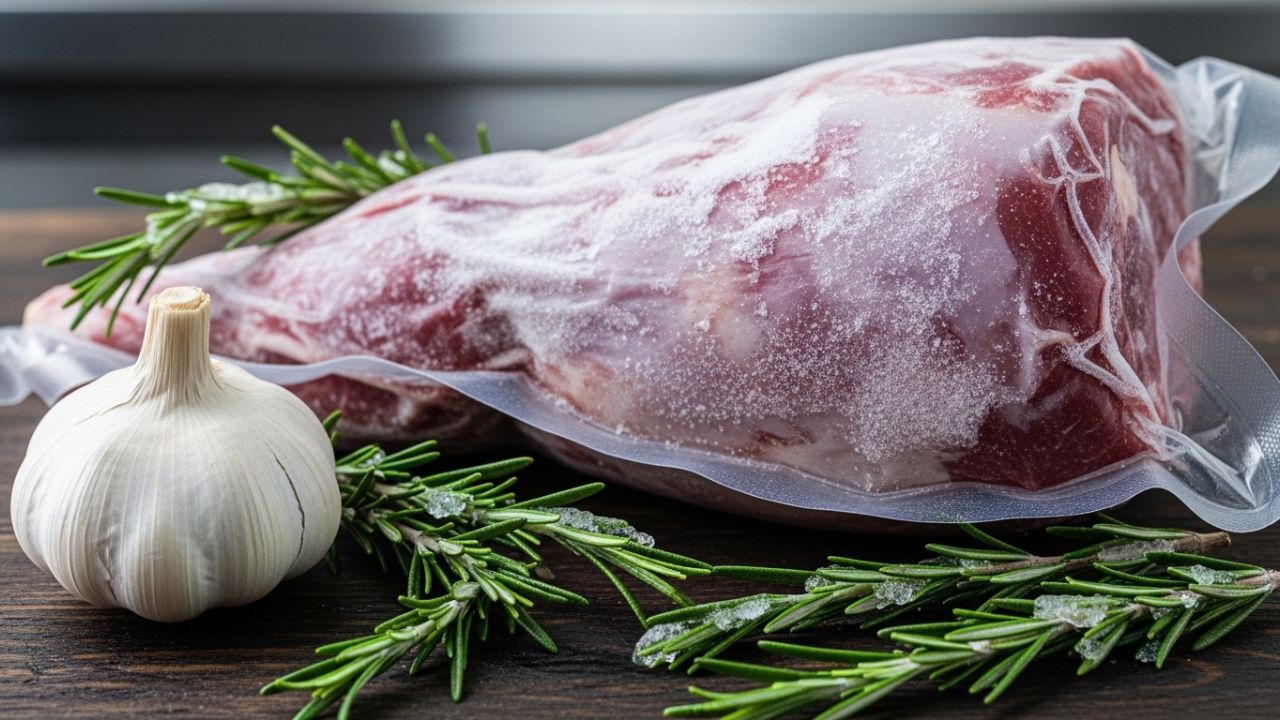
We have all been there. You have a beautiful, heavy leg of lamb tucked away in the freezer, perhaps saved for a special occasion that hasn’t quite arrived yet. Then, Sunday morning rolls around, and you realize you forgot to move it to the refrigerator two days ago. The panic sets in: Can you cook a leg of lamb from frozen? Will it be tough? Is it even safe?
In my experience, cooking a frozen leg of lamb isn’t just a “plan B”—it can actually result in some of the most succulent meat you’ve ever tasted if you handle the temperature curve correctly. While conventional wisdom says you must thaw meat completely, I’ve found that a slow-roasting approach allows the exterior to develop a beautiful crust while the interior gently reaches that perfect, rosy medium-rare.
If you’re looking for more ways to master your freezer staples and elevate your weekend roasts, visit our homepage: https://fooodies.site.
Selecting Your Lamb
Before we dive into the oven settings, let’s talk about what you’re pulling out of the freezer. Not all legs of lamb are created equal.
- Bone-In vs. Boneless: A bone-in leg offers superior flavor and acts as a heat conductor, helping the meat cook more evenly from the inside out. However, if you are cooking strictly from frozen, a boneless, netted roast is often easier to manage because of its uniform shape.
- Size Matters: For a standard home oven, a 4 to 6-pound leg is the “sweet spot.” Anything larger might take so long to cook from frozen that the outer layers become overdone before the center thaws.
- Check the Seal: Ensure the vacuum packaging is intact. If there are ice crystals inside the plastic (freezer burn), the meat may have lost some moisture. Don’t worry, though—our basting liquid will help revive it.
Aromatics and Seasoning
Since we aren’t marinating this meat overnight (because, well, it’s a block of ice), we need high-impact seasonings that create a flavorful crust.
- The Roast: One leg of lamb (frozen solid or partially thawed).
- The “Wet Rub”: A mixture of olive oil, coarse kosher salt, cracked black pepper, and dried oregano.
- Fresh Aromatics: A whole head of garlic (smashed), fresh rosemary sprigs, and thick slabs of yellow onion.
- The Braising Base: A cup of dry white wine or beef stock to keep the oven environment humid.
- Acid: Fresh lemon juice to brighten the rich fats.
The Low-and-Slow Method
Cooking meat from frozen requires a two-stage approach: the “Thaw-Roast” and the “Searing Finish.”
1. The Tempering Stage
Preheat your oven to a low 325°F (163°C). Place your aromatics—the onions, garlic, and rosemary—at the bottom of a heavy roasting pan. This creates a natural rack so the lamb doesn’t boil in its own juices. Place the frozen lamb directly on top.
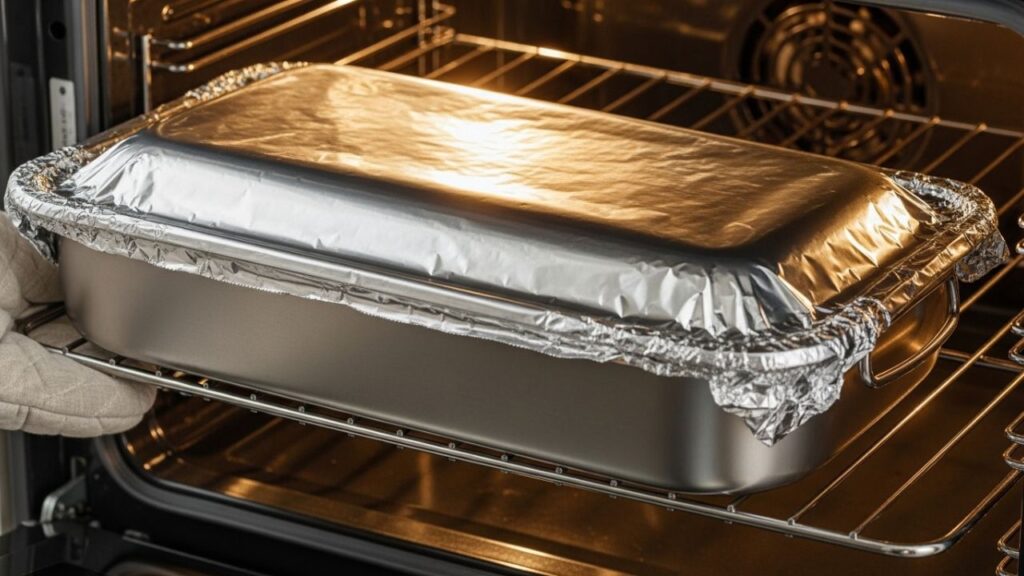
One trick I always use is to pour a little liquid (stock or wine) into the bottom of the pan at this stage. Cover the whole pan tightly with heavy-duty aluminum foil. This creates a steam chamber that defrosts the meat evenly without drying out the surface. Roast covered for about 60 to 90 minutes.
2. The Seasoning Window
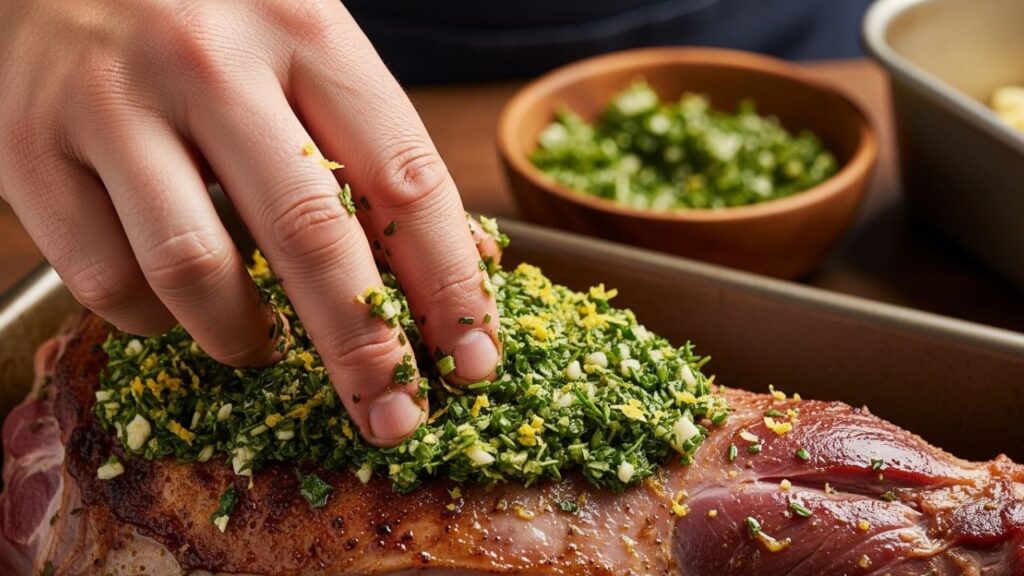
After the initial hour or so, the exterior of the lamb will be soft enough to accept seasoning. Carefully remove the foil. After testing this several times, I’ve realized that salt simply bounces off a frozen roast. But now, with the surface softened, you can rub your oil and herb mixture all over the meat.
3. The Main Roast
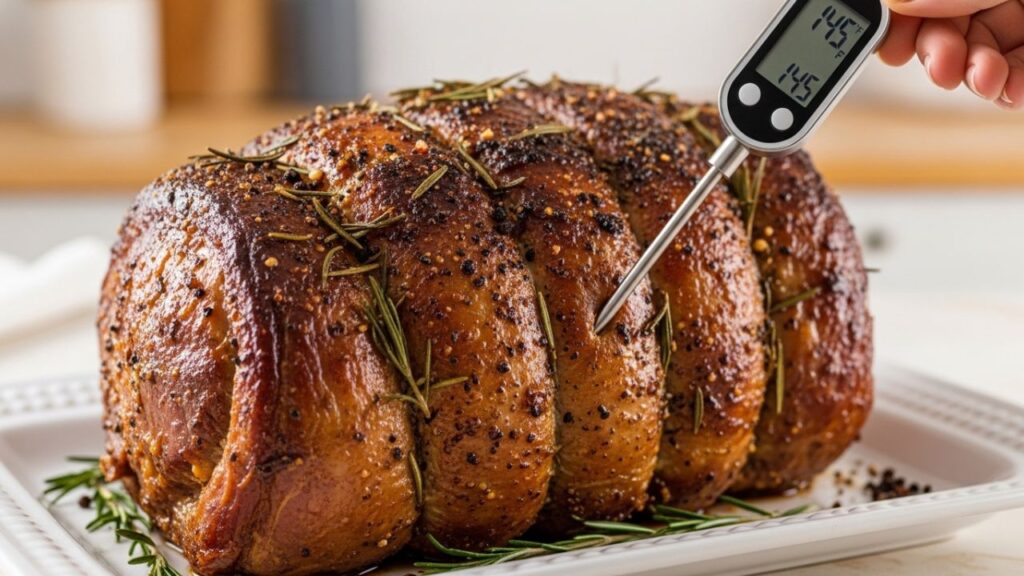
Leave the foil off and return the lamb to the oven. You are looking for an internal temperature of 135°F (57°C) for medium-rare or 145°F (63°C) for medium. Because it started frozen, this will take roughly 50% longer than a thawed roast—usually about 20–25 minutes per pound total.
4. The High-Heat Blast
If your lamb looks a bit pale when it reaches its target temperature, remove it from the oven and crank the heat up to 450°F (232°C). Once the oven is hot, slide the lamb back in for 5–8 minutes. This provides that professional, dark-brown crust (the Maillard reaction) without overcooking the center.
Personal Cooking Insights: What I’ve Learned
- The Carry-Over Cook: This is the most important tip I can give you. Lamb is a dense muscle. Once you take it out of the oven, the internal temperature will continue to rise by about 5 to 7 degrees. If you pull it at 135°F, it will rest at a perfect 140°F plus.
- The Thermometer is Non-Negotiable: When cooking from frozen, you cannot rely on “time per pound” alone. You must use a meat thermometer. Ensure you hit the very center of the thickest part of the leg without touching the bone.
- Don’t Skip the Rest: Let the roast sit for at least 20 minutes before carving. If you cut into it immediately, all those beautiful juices will end up on your cutting board instead of in the meat. Understanding the science of resting meat is a game-changer for any home cook.
Variations: Making it Your Own
- The Mediterranean Version: Use a rub of lemon zest, dried mint, and plenty of garlic. Serve with a side of yogurt-cucumber sauce (tzatziki).
- The Spicy Roast: Add smoked paprika and a pinch of cumin to your oil rub for an earthy, warm flavor profile that pairs beautifully with lamb’s natural gaminess.
- The Pan Gravy: Use the drippings at the bottom of the pan! Whisk in a little flour and stock to create a rich, rosemary-infused gravy. For guidance on perfecting your sauce consistency, check out these fundamental sauce-making tips.
Common Mistakes to Avoid
- Cooking at Too High a Heat: If you start a frozen roast at 400°F, the outside will char and turn bitter before the inside even reaches room temperature. Low and slow is the only way.
- Forgetting the Foil: Without the initial foil cover, the dry heat of the oven will “freeze-dry” the outer layer of the meat while it tries to thaw.
- Using Water Instead of Stock: Water adds moisture but dilutes flavor. Always use a flavorful liquid for your roasting base.
FAQs
1: Is it safe to cook lamb directly from the freezer?
Yes, according to food safety guidelines, it is safe to cook frozen meat as long as it reaches the proper internal temperature. It simply takes longer than thawed meat.
2: Why is my lamb tough?
Lamb becomes tough if it is cooked too quickly or overcooked beyond “well done.” If you find it’s tough, it likely missed the resting period or was roasted at too high a temperature.
3: Can I use this method for a leg of goat or venison?
Yes, though both goat and venison are leaner than lamb, so you may want to increase the amount of olive oil or even “bard” the meat (wrap it in fat/bacon) to prevent drying.
4: Should I wash the lamb before cooking?
No. Washing meat can spread bacteria around your kitchen. The high heat of the oven will take care of any safety concerns.
5: What do I do with the leftovers?
Lamb leftovers are arguably better the next day. Shave the meat thin for sandwiches, or cube it and toss it into a quick curry or stew.
Conclusion
Cooking a frozen leg of lamb might feel like a daunting task, but it’s a skill that grants you immense freedom in the kitchen. It removes the stress of a multi-day thaw and delivers a meal that feels celebratory and sophisticated. By respecting the temperature and giving the meat the time it needs to rest, you’ll produce a roast that no one would ever guess started as a block of ice.

Henry James is the writer behind Fooodies.site, where he shares easy recipes, practical cooking guides, and simple kitchen tips for everyday home cooks. He enjoys experimenting with flavors and turning everyday ingredients into delicious, homemade meals. His goal is to make cooking feel simple, enjoyable, and achievable for everyone. He focuses on creating clear, well-tested content that readers can trust and follow with confidence.