
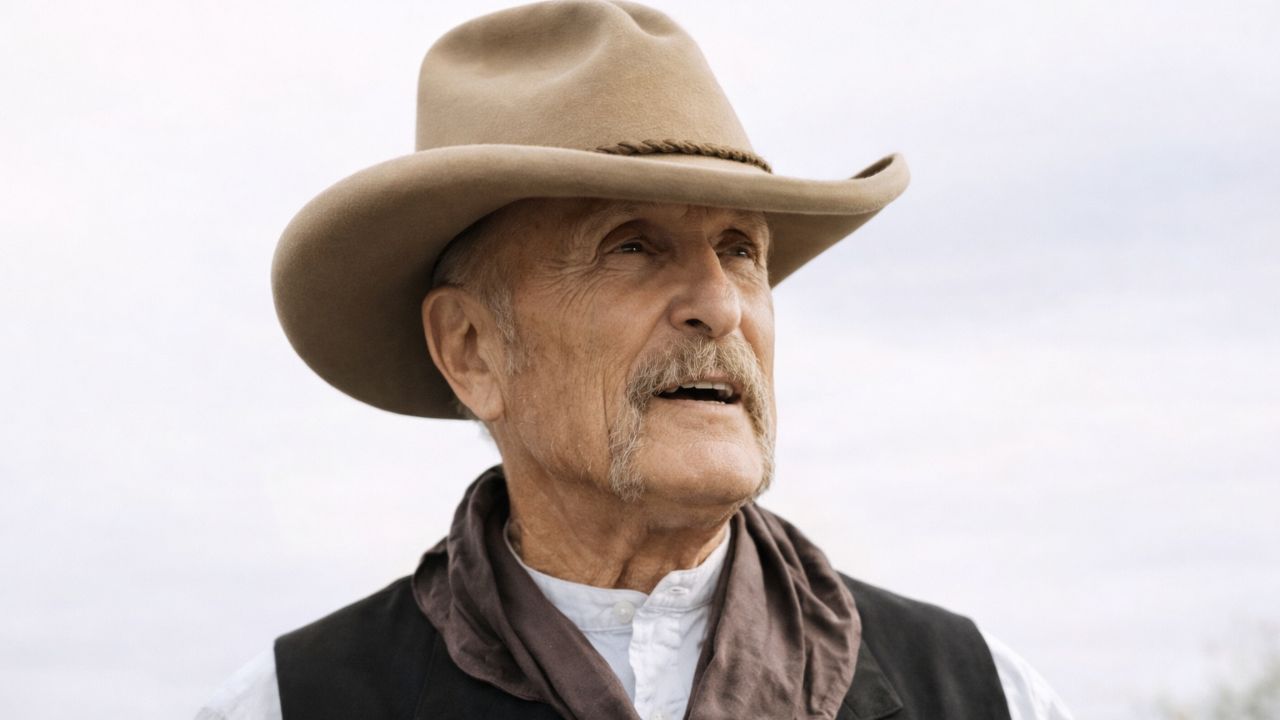
It is a heavy week for cinema. The actor the world is mourning is Robert Duvall, who passed away this past Sunday, February 15, 2026, at the age of 95.
To understand why this is such a monumental loss, you have to look at the sheer weight of his 70-year career. He wasn’t just a “movie star”; he was widely considered one of the greatest technical actors to ever live—the kind of performer other actors studied to learn the craft.
Here is the full breakdown of his life, his passing, and his massive legacy.
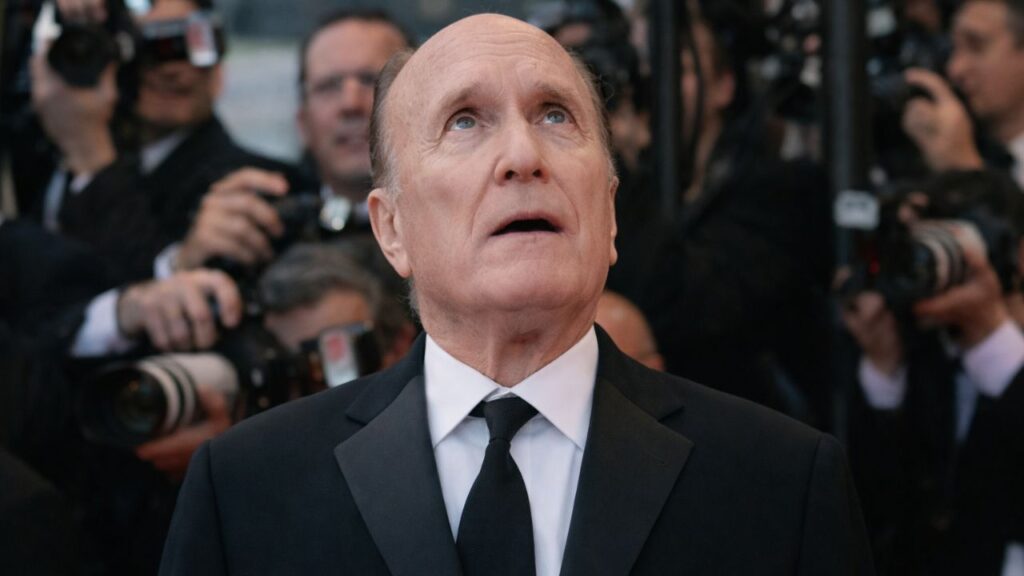
1. The Passing (February 2026)
Robert Duvall died peacefully at his home in Middleburg, Virginia. His wife, Luciana Pedraza, confirmed the news on Monday, describing him as her “beloved husband” and a “storyteller” who gave everything to the “truth of the human spirit.”
- Tributes: The industry reaction has been immense. Francis Ford Coppola, who directed him in The Godfather and Apocalypse Now, called him an “essential part” of American cinema. Al Pacino and Robert De Niro also released statements honoring his “phenomenal gift.”
- Final Wishes: True to his low-key nature, his family stated there will be no formal public service. Instead, they asked fans to honor him by “watching a great film” or “taking a drive in the countryside.”
2. Iconic Roles That Defined Hollywood
Robert Duvall had a “shape-shifting” ability. He didn’t have the typical look of a leading man, which allowed him to disappear into characters so completely that audiences often forgot they were watching the same person.
The Godfather (1972) & Part II (1974)
He played Tom Hagen, the Corleone family’s “Consigliere” (lawyer/advisor). While the other characters were explosive and violent, Duvall played Hagen with a chilling, quiet rationality. He was the “calm in the storm,” which made the family feel grounded and real.
Apocalypse Now (1979)
In perhaps the most famous 15 minutes of acting in history, he played Lt. Col. Bill Kilgore. Wearing a cowboy hat in the middle of a war zone, he delivered the legendary line:
“I love the smell of napalm in the morning… It smelled like… victory.”
Tender Mercies (1983)
After several nominations, he finally won the Academy Award for Best Actor for playing Mac Sledge, a broken-down, alcoholic country singer. He actually sang his own songs in the film and spent weeks driving around the South to perfect the accent and mannerisms.
Lonesome Dove (1989)
To many fans, this was his greatest work. He played Augustus “Gus” McCrae, a witty, retired Texas Ranger. Duvall himself often said this was his favorite role of his entire career.
3. His “Actor’s Actor” Reputation
Duvall belonged to a legendary generation of New York actors. In the 1950s, he shared a cramped apartment with Dustin Hoffman and Gene Hackman while they all struggled to find work.
- The Meisner Technique: He was a devotee of Sanford Meisner, focusing on “living truthfully under imaginary circumstances.”
- The “Late Bloomer”: He didn’t get his big break until he was 31, playing the silent, mysterious Boo Radley in To Kill a Mockingbird (1962).
- Directorial Prowess: He wasn’t just in front of the camera. He wrote and directed The Apostle (1997), a deeply personal film about a flawed preacher that earned him yet another Oscar nomination.
4. Why He Was Different
Unlike many modern stars, Duvall hated the “glitz” of Hollywood. He lived on a farm in Virginia, practiced Argentine Tango (he was obsessed with it), and was known for being incredibly blunt. He once said, “I don’t like to talk about acting. I just like to do it.”
His legacy in numbers:
- 95 years old at the time of death.
- 7 Academy Award nominations (1 win).
- 2 Emmy Awards.
- 4 Golden Globes.
If you want to see why everyone is calling him the “greatest,” I’d suggest starting with The Godfather or Lonesome Dove. You’ll see a man who didn’t just play a part—he became it.