
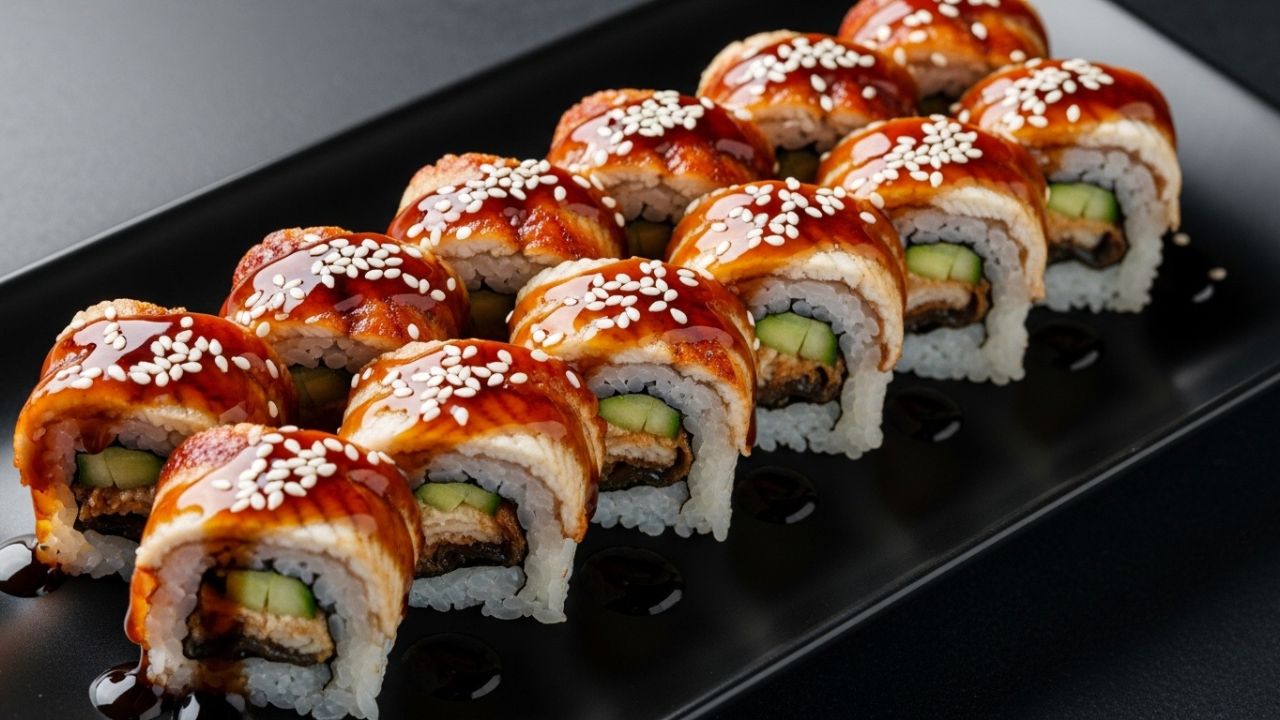
There is something undeniably comforting about the contrast of textures in a classic eel cucumber roll. Often appearing on menus as the “Unagi Kyuri Maki,” this staple of the sushi world manages to strike a perfect balance that few other rolls achieve. You have the rich, buttery, and slightly smoky flavor of the grilled freshwater eel (unagi) meeting the crisp, cool, and refreshing snap of a julienned cucumber. It is a masterclass in culinary equilibrium. For years, I thought this was a dish best left to the professionals behind the mahogany sushi counters, but after a few messy attempts in my own kitchen, I realized that making a high-quality roll at home is entirely achievable—and incredibly rewarding.
The beauty of the eel cucumber roll lies in its simplicity. Unlike complex “rainbow rolls” or deep-fried specialty rolls that require a dozen ingredients, this one relies on the quality of its core components. When you take that first bite, the warmth of the eel melts into the vinegar-seasoned rice, while the cucumber provides a necessary palate cleanser that keeps the richness from becoming overwhelming. If you’ve ever found yourself intimidated by the thought of handling raw fish, this is the perfect “entry-level” sushi project because the eel is traditionally served cooked and glazed. Before we dive into the bamboo mats and nori, you might want to check out my guide on essential sushi making tools for beginners to ensure your kitchen is fully prepped for the task ahead.
The Essentials: What You’ll Need
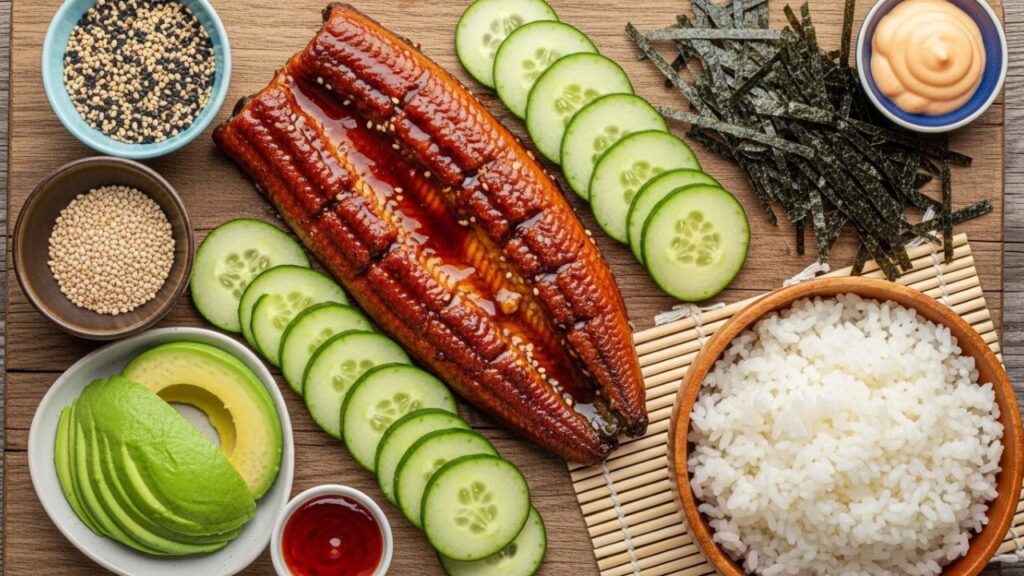
To get that authentic taste, you don’t need a pantry full of exotic items, but you do need to be selective about the basics. Sushi is an art of subtraction; every ingredient must earn its place.
- Unagi (BBQ Eel): Most home cooks find this pre-cooked and vacuum-sealed at Asian grocery stores. It usually comes frozen with a soy-based glaze already applied.
- Japanese Cucumber: These are slender, thin-skinned, and have very few seeds. If you can’t find them, a Persian cucumber or a hothouse (English) cucumber is a great substitute. Just avoid the thick-skinned “slicing” cucumbers found in standard produce aisles, as they are too watery.
- Sushi Rice: You must use short-grain Japanese rice. Its high starch content gives it the “stickiness” required to hold the roll together.
- Nori Sheets: High-quality roasted seaweed is essential. Look for sheets that are dark green, almost black, and have a consistent thickness.
- Sushi Vinegar: A blend of rice vinegar, sugar, and salt. You can buy this pre-mixed or make your own to season the rice.
- Unagi Sauce (Nitsume): This is a thick, sweet, and savory reduction. If your eel doesn’t come with extra, you can simmer soy sauce, mirin, and sugar until it reaches a syrupy consistency.
Preparing for Success: Prep and Timing
Sushi is 80% preparation and 20% execution. Once your hands are sticky with rice, you won’t want to be reaching for a knife or searching for a towel.
- Prep Time: 40 minutes (mostly rice preparation)
- Cook Time: 10 minutes
- Total Time: 50 minutes
- Serving Size: Makes 4 full rolls (approx. 24–32 pieces)
Crafting the Perfect Foundation
The secret to a great eel cucumber roll isn’t actually the eel—it’s the rice. If the rice is mushy or bland, the whole experience falls apart. Start by rinsing your rice under cold water until the water runs clear; this removes excess surface starch. Once cooked, transfer the hot rice to a wide wooden or plastic bowl. While it’s still steaming, gently fold in the sushi vinegar using a slicing motion with a spatula. This ensures every grain is coated without being crushed.
While the rice cools to room temperature (never use hot rice on nori, or it will turn the seaweed rubbery), prepare your cucumber. I prefer to “matchstick” the cucumber into very fine strips. This creates more surface area, which leads to a better “crunch” in every bite. For the eel, if you bought a frozen fillet, let it thaw completely. You can warm it briefly in the oven or under a broiler to caramelize the sugars in the sauce. Slice the eel into long, half-inch thick strips that will run the length of your nori sheet.
The Art of the Roll
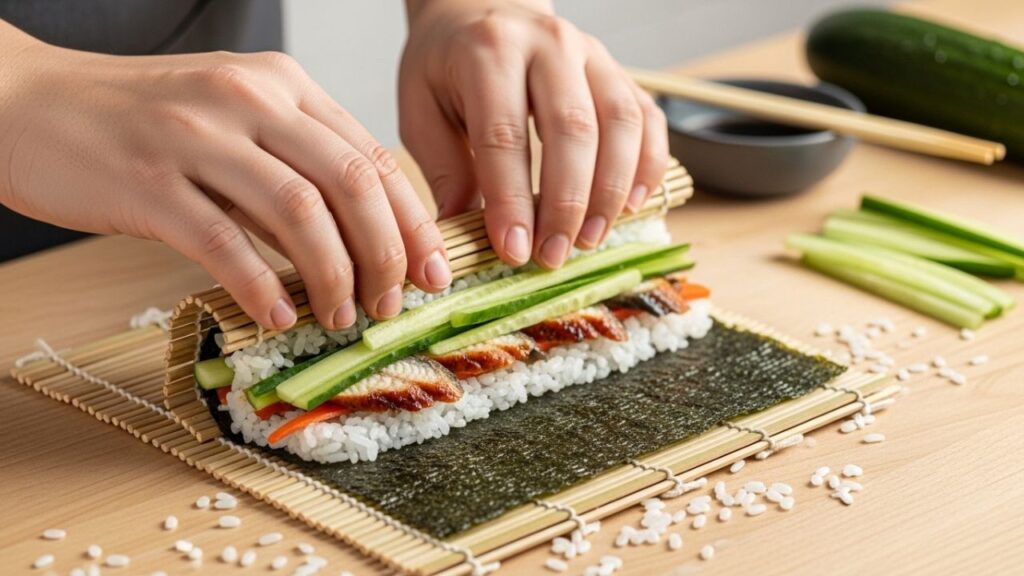
Place your bamboo rolling mat (makisu) on a flat surface. I highly recommend wrapping your mat in plastic wrap; it prevents the rice from sticking to the wood and makes cleanup a breeze.
- Lay the Nori: Place a half-sheet of nori on the mat, rough side facing up. The lines on the nori should run parallel to the slats on your mat.
- Spread the Rice: Wet your hands with “Tezu” (a mixture of water and a splash of rice vinegar) to prevent sticking. Take a handful of rice and spread it evenly over the nori. Leave about a half-inch gap at the top edge of the seaweed.
- The Filling: Lay two strips of eel across the center of the rice. Place a generous pinch of cucumber matchsticks right next to the eel. If you’re feeling adventurous, you might explore creative sushi filling ideas to see how other vegetables like avocado or pickled radish can complement the smoky unagi.
- The Tuck and Roll: Using the mat, lift the edge of the nori closest to you and fold it over the filling. Tuck it in tightly, using your fingers to keep the ingredients in place. Continue rolling forward with gentle, even pressure until you reach the end of the nori.
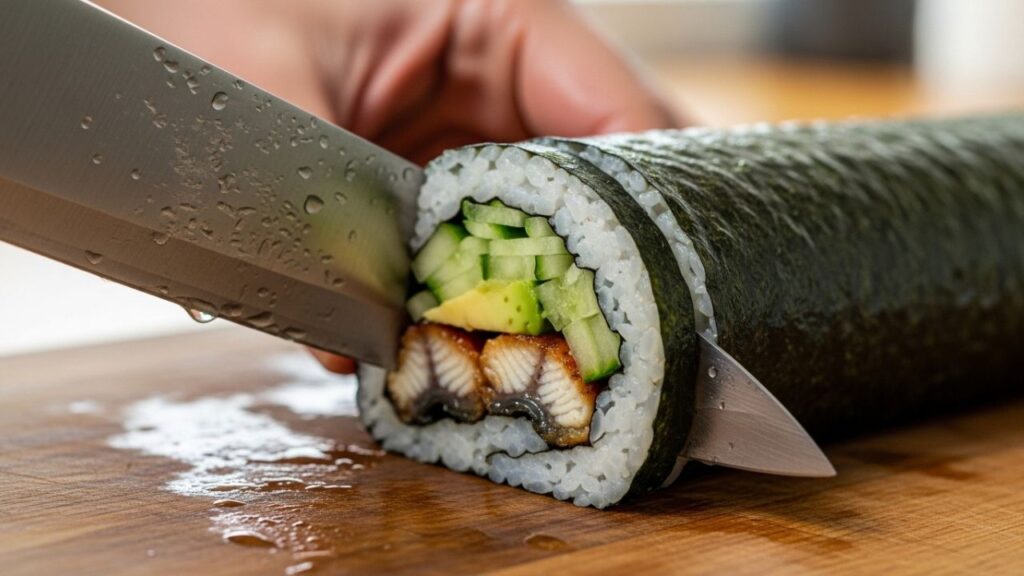
- The Slice: This is where most people struggle. Use a very sharp knife and wipe it with a damp cloth between every single cut. Slice the roll in half, then into quarters, and finally into eighths.
Pro Tips for a Restaurant-Quality Finish
If you want your eel cucumber roll to look like it came from a high-end bistro, pay attention to the temperature. The contrast between the slightly warm eel and the cold cucumber is part of the magic. If you have a kitchen torch, you can give the top of the sliced eel a quick “aburi” (sear) to add a charred aroma right before serving.
Also, don’t overstuff the roll. It is a common mistake to think more is better, but an overfilled roll won’t seal properly and will fall apart when dipped in soy sauce. Aim for a diameter that is easy to eat in one single mouthful. This allows the flavors to meld perfectly on the palate.
Serving and Presentation
Presentation is half the meal in Japanese cuisine. Arrange your slices on a ceramic platter and drizzle a tiny bit of extra unagi sauce over the top in a zig-zag pattern. A sprinkle of toasted white sesame seeds adds a nice nuttiness and a professional visual touch. Serve with a side of pickled ginger (gari) to cleanse the palate between pieces and a small dollop of wasabi for those who enjoy a bit of heat.
If you are hosting a dinner party, consider pairing this with a light miso soup or a sunomono (cucumber salad). For more inspiration on how to build a full menu around your sushi creations, check out my favorite refreshing Japanese side dishes to round out the meal.
Storage and Reheating Guidance
Sushi is always best enjoyed immediately, but life happens. If you have leftovers, store them in an airtight container in the refrigerator. However, be aware that the rice will harden in the cold.
- Storage: Consume within 24 hours for the best quality.
- Reheating: Do not microwave the whole roll, as the seaweed will become chewy. If you must, let the roll sit at room temperature for 15 minutes to take the chill off the rice. Alternatively, you can remove the eel, warm it slightly in a toaster oven, and enjoy it over a fresh bowl of rice as an “unadon” style snack.
FAQ Section
1.Can I use canned eel for this recipe?
While canned eel exists, it is usually packed in oil or a very different brine. For an authentic eel cucumber roll, it is highly recommended to use frozen “Unagi Kabayaki” found in the freezer section of Asian markets.
2.Is unagi the same as anago?
Not quite. Unagi is a freshwater eel, which is richer and fattier. Anago is saltwater eel, which is leaner and has a more delicate, sweet flavor. Unagi is the traditional choice for this specific roll.
3;How do I keep my sushi rice from being too sticky?
The key is to rinse the raw rice thoroughly until the water is no longer cloudy. Also, when mixing in the vinegar, use a “cutting” motion rather than stirring, which prevents the grains from breaking and releasing too much starch.
4.Can I make this roll without a bamboo mat?
Yes! You can use a clean kitchen towel covered with plastic wrap or even a firm piece of parchment paper. It takes a bit more finesse, but it works in a pinch.
Conclusion
Creating your own eel cucumber roll at home is a journey that is as much about the process as it is about the final bite. It teaches you patience, precision, and the value of high-quality ingredients. There is a deep satisfaction in seeing those neat, green-and-brown speckled rounds lined up on a plate, knowing you crafted them yourself. Whether you are looking to save money on your weekly sushi habit or simply want to impress friends at your next gathering, this recipe is a reliable classic that never fails to please. So, grab your rice paddle, slice that cucumber thin, and enjoy the smoky, crunchy, savory delight of homemade unagi maki.
