
There is something deeply nostalgic about a smothered pork chop supreme recipe. It’s the kind of meal that reminds me of Sunday afternoons when the kitchen was warm, the windows were slightly fogged from steam, and the aroma of searing meat and savory gravy filled the entire house.
However, we’ve all had “that” pork chop—the one that’s dry, tough, and requires a gallon of water just to swallow. In my experience, the difference between a mediocre chop and a “Supreme” one lies in the technique. It’s about more than just throwing meat in a pan; it’s about layering flavors and managing moisture. If you want to amplify the meal, consider pairing it with some smoky russet potatoes. After testing this several times in my own kitchen, I’ve refined a method that ensures every bite is fork-tender and bathed in a rich, velvety sauce.

Choosing Your Chops: The Foundation of Flavor
Before we even turn on the stove, we have to talk about the meat. You cannot get a “Supreme” result from inferior cuts.
I’ve found that bone-in, thick-cut rib chops (at least 1 to 1.5 inches thick) are the gold standard for this recipe. The bone acts as an insulator, keeping the meat near it juicy, while the fat cap renders down to create a built-in basting liquid.
- Avoid the “Thin-Cut”: Those thin, breakfast-style chops cook far too quickly. By the time you get a good sear on the outside, the inside is already overcooked.
- The Marbling Factor: Look for meat that has small flecks of white fat within the muscle. This intramuscular fat melts during the braising process, providing that “melt-in-your-mouth” texture.
- The Temperature Trick: One trick I always use is taking the chops out of the refrigerator at least 20–30 minutes before cooking. If you drop a cold chop into a hot pan, the fibers tense up immediately, leading to a tougher result.
The Components: What Makes it “Supreme”?
The “Supreme” moniker comes from the addition of aromatics and a creamy, savory sauce that transforms a simple protein into a gourmet meal. Here is what you’ll need to gather:
- The Pork Chops: 4 thick-cut, bone-in chops.
- The Flour Dredge: All-purpose flour seasoned heavily with salt, black pepper, smoked paprika, and garlic powder.
- The Aromatics: A large yellow onion (sliced thin) and fresh garlic.
- The Liquid Gold: High-quality chicken or vegetable stock.
- The Creaminess: Sour cream or heavy cream.
- The Earthy Element: Fresh mushrooms (Cremini or Baby Bella add the best color and depth).

Step-by-Step: Crafting the Perfect Chop
1. The Sear (The Most Critical Step)
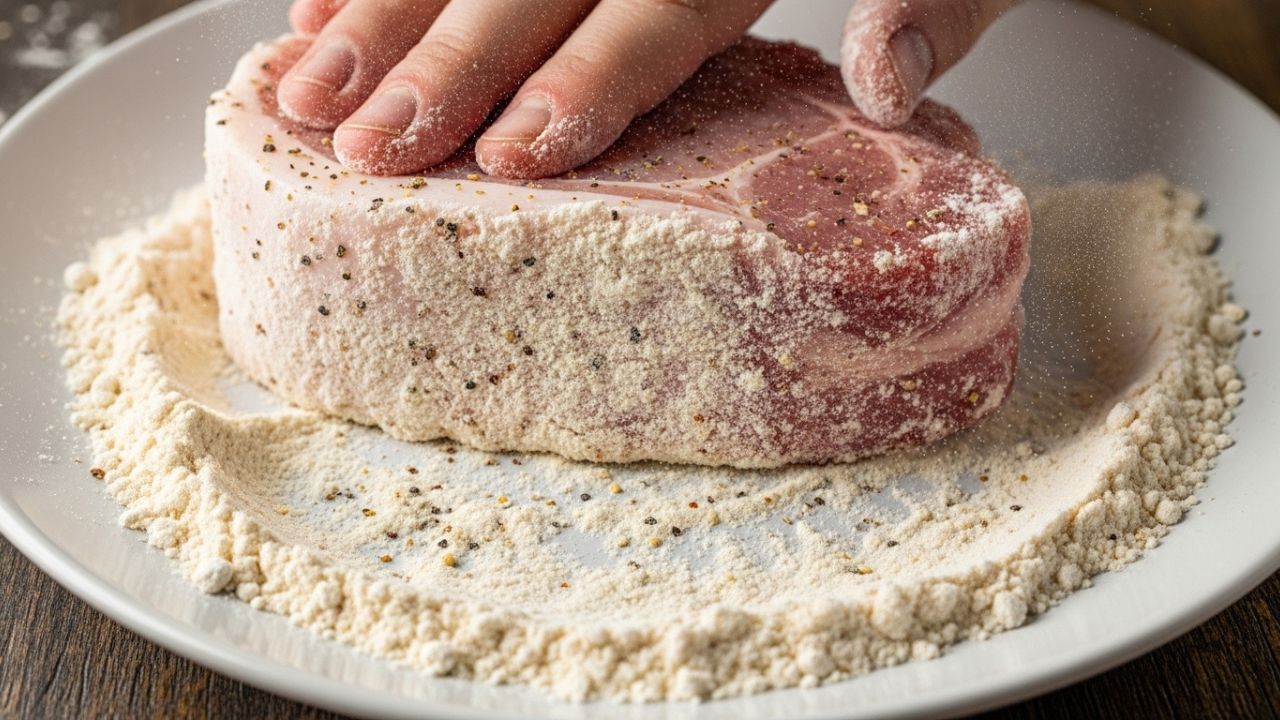
Season your chops generously with salt and pepper before dredging them in your seasoned flour. Shake off the excess—you want a light veil, not a heavy crust. Heat a heavy-bottomed skillet (cast iron is my personal favorite) over medium-high heat with a mixture of oil and a knob of butter.
One trick I always use is to wait until the oil is shimmering but not smoking. Lay the chops away from you to avoid splashes. Sear them for about 3–4 minutes per side. We aren’t cooking them through yet; we are simply developing the “Maillard reaction”—that golden-brown crust that contains all the flavor. Remove the chops and set them aside on a plate.
2. Sautéing the Aromatics
Don’t you dare wash that pan! Those brown bits stuck to the bottom (called the fond) are concentrated flavor. Lower the heat to medium and toss in your sliced onions and mushrooms. As they release their moisture, use a wooden spoon to scrape the bottom of the pan.
After testing this several times, I’ve realized that patience here pays off. Let the onions get soft and slightly caramelized. Only then should you add your minced garlic, cooking it for just 60 seconds until it’s fragrant but not burnt.
3. The Deglaze and Simmer
Sprinkle a tablespoon of your leftover dredging flour over the vegetables and stir for a minute to cook out the “raw” flour taste. Slowly pour in your stock while whisking or stirring constantly. The sauce will begin to thicken.
Slide the pork chops (and any juices that accumulated on the plate) back into the pan. The liquid should come about halfway up the sides of the chops. Cover the pan, turn the heat to low, and let them gently braise for about 15–20 minutes.
4. The Finishing Touch
Once the pork is tender, remove the lid. Stir in your sour cream or heavy cream. This adds a silky acidity that cuts through the richness of the pork. Taste the sauce—does it need a pinch more salt? A crack of black pepper? Trust your palate.
Personal Insights: Secrets from My Kitchen
- The Power of Acid: If the sauce feels “flat,” a tiny splash of apple cider vinegar or a squeeze of lemon juice at the very end can wake up all the other flavors.
- The Resting Period: Just like a steak, pork chop supreme recipe need to rest. Let the dish sit for 5 minutes off the heat before serving. This allows the muscle fibers to reabsorb the juices.
- Consistency Control: If your sauce is too thick, add a tablespoon of stock. If it’s too thin, let it simmer uncovered for a few extra minutes. Understanding the science of thickening agents can really help you master this stage.
Variations and Tweaks
- The Herbaceous Chop: Add fresh thyme or sage to the pan during the braising step. Pork and sage are a match made in culinary heaven.
- The Spicy Kick: Incorporate a pinch of cayenne pepper or red pepper flakes into your flour dredge for a subtle heat.
- The Wine Element: Replace half of the stock with a dry white wine (like Pinot Grigio) for a more sophisticated, French-inspired flavor profile.

Common Mistakes to Avoid
- Overcrowding the Pan: If you put too many chops in at once, the temperature drops, and the meat steams instead of searing. Cook in batches if necessary.
- Using High Heat for the Cream: Never boil the sauce once the sour cream is added, or it may curdle. Keep it at a gentle simmer.
- Relying on Color Alone: Use an instant-read thermometer. Pork is perfectly safe and juiciest at an internal temperature of $145°F$ ($63°C$). For more on safe internal temperatures, check out the USDA guidelines.
Storage and Reheating Tips
Pork Chop Supreme recipe makes for incredible leftovers because the meat continues to marinate in the gravy. And when it comes time for dessert, why not try an innovative dessert like cake in a can to wrap up your meal? Store in an airtight container for up to 3 days.
To reheat: I recommend doing so on the stovetop over low heat. Add a splash of water or milk to loosen the gravy. Avoid the microwave if possible, as it tends to turn the pork rubbery.
FAQs
1: Can I use boneless pork chops for this recipe?
Yes, but be very careful with the timing. Boneless chops cook faster and are prone to drying out. I recommend reducing the simmering time by about 5 minutes.
2: My gravy is lumpy, how do I fix it?
This usually happens if the liquid is added too quickly to the flour. You can fix it by running the sauce through a fine-mesh strainer or using an immersion blender (before you put the meat back in!).
3: What should I serve with Pork Chop Supreme?
This dish cries out for something to soak up the gravy. Garlic mashed potatoes, egg noodles, or a crusty piece of sourdough bread are my go-to choices.
4: Can I freeze this dish?
While you can freeze the cooked pork, cream-based sauces sometimes separate when thawed. If you plan to freeze it, I suggest making the recipe up until the point of adding the cream, then adding the cream fresh when you reheat it.
5: Why is my pork still tough?
It’s likely either undercooked (not enough time to break down the connective tissue) or it was a very lean cut that was overcooked on high heat. Braising low and slow is the key.
Conclusion
Making a Pork Chop Supreme isn’t just about following a recipe; it’s about understanding how heat and moisture interact with the meat. Once you master the sear and the simmer, you’ll find yourself coming back to this dish whenever you need a bit of culinary comfort. It’s hearty, honest, and undeniably delicious. Give it a try this week—your family will thank you! For a perfect complement to this rich dish, check out these 5 secrets to master gourmet salad recipes.

Henry James is the writer behind Fooodies.site, where he shares easy recipes, practical cooking guides, and simple kitchen tips for everyday home cooks. He enjoys experimenting with flavors and turning everyday ingredients into delicious, homemade meals. His goal is to make cooking feel simple, enjoyable, and achievable for everyone. He focuses on creating clear, well-tested content that readers can trust and follow with confidence.