

For many of us, the first time we sit at a sushi bar and watch a chef’s hands move with lightning speed, it feels like we’re witnessing a sacred, unattainable art. We see the sharp knives, the perfectly seasoned rice, and the intricate tuck-and-roll technique, and we think, I could never do that at home. But here is a refreshing truth: while it takes decades to become a Shokunin (master), making delicious, beautiful Sushi Rolls for Beginners is actually a very manageable—and incredibly fun—home kitchen project.
Making sushi at home isn’t just about saving money (though it certainly does that); it’s about the tactile satisfaction of the process, and exploring a yummy Asian menu can inspire the fillings and flavors you choose. There is something meditative about spreading the warm, seasoned rice over a sheet of nori and choosing the exact combination of crunchy cucumber and creamy avocado you want. It’s a fantastic way to host a dinner party where everyone gets involved in the craft. You don’t need the world’s most expensive Bluefin tuna to start. In fact, many of the best entry-level rolls use cooked ingredients or simple vegetables. In this guide, we are going to demystify the process, from the chemistry of the rice to the tuck and roll move that keeps everything from falling apart. Grab your bamboo mat, and let’s get rolling.

Essential Ingredients and Tools
Before you dive in, you need to gather a few specific items. You can’t just use any rice or any vegetable—the textures are what make sushi work.
The Rice (The Most Important Part)
- Sushi Rice (Short-Grain White Rice): You need the starchiness of short-grain rice to ensure it sticks together. Long-grain rice will simply fall apart.
- Sushi Vinegar: A mixture of rice vinegar, sugar, and salt. You can buy this pre-mixed or make your own.
The Wrapper and Fillings
- Nori Sheets: These are the dried seaweed sheets. Look for Gold or Silver grade for the best flavor and flexibility.
- Fillings for Beginners: I recommend starting with cooked or vegetable options:
- Cucumber: Sliced into long, thin matchsticks.
- Avocado: Sliced into thin wedges.
- Imitation Crab (Surimi): The classic base for a California roll.
- Smoked Salmon: A great way to get a fishy flavor without the safety concerns of raw, sushi-grade fish.
The Hardware
- Bamboo Rolling Mat (Makisu): Essential for shaping the rolls.
- Plastic Wrap: Wrapping your bamboo mat in plastic wrap prevents the rice from sticking to the wood—a pro-tip for every beginner!
- A Very Sharp Knife: This is non-negotiable for clean cuts.

Step-by-Step Instructions
1. The Foundation
Rinse 2 cups of sushi rice under cold water until the water runs clear. This removes excess surface starch. Cook the rice according to package instructions (or in a rice cooker). While the rice is still hot, transfer it to a large bowl and gently fold in 1/4 cup of sushi vinegar using a wooden paddle or spoon. Do not mash the grains! Fan the rice to cool it quickly; this creates that iconic glossy finish.
2. Setting Up Your Station
Lay your plastic-wrapped bamboo mat on a flat surface. Place a sheet of nori, shiny side down, on the mat. Keep a small bowl of Tezu (water mixed with a splash of rice vinegar) nearby. This is for dipping your fingers so the rice doesn’t stick to your hands.
3. Spreading the Rice
Wet your hands, grab a handful of rice, and gently spread it over the nori. Leave about an inch of bare nori at the top edge—this acts as the seal. The rice should be about 1/4 inch thick. Don’t press too hard; you want the grains to stay distinct, not become a paste.
4. The Filling
Place your ingredients (crab, cucumber, avocado) in a neat horizontal line about one-third of the way up from the bottom of the nori sheet. Once comfortable with the basics, our Eel Cucumber Roll guide can help you explore slightly more advanced rolls. Don’t overstuff! Beginners often add too much, making it impossible to close the roll.
5. The Roll
Using the bamboo mat, lift the bottom edge of the nori and fold it over the filling. Use your fingers to tuck the edge of the nori under the filling as you roll. Apply firm, even pressure. Once you reach the bare nori at the top, dab it with a tiny bit of water and finish the roll to seal it.
6. The Clean Cut
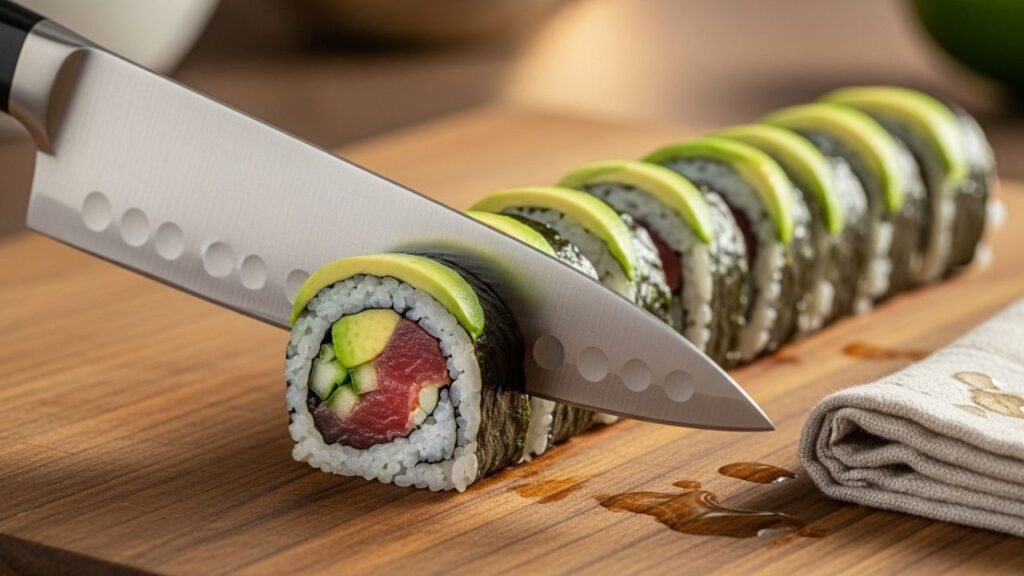
Wet the blade of your sharp knife with a damp cloth. Slice the roll in half, then slice each half into four even pieces. Wipe and re-wet the knife between every cut. This ensures the rice doesn’t tear the nori.
Pro-Tips for Sushi Success
- The Rice Temperature: Never use refrigerator-cold rice. It should be at room temperature or slightly warm to the touch. Cold rice is hard and won’t stick.
- The Tezu Hand: Always keep your hands damp. If you try to touch sushi rice with dry hands, you will end up wearing more rice than you put in the roll.
- Kitchen Tip: If you love the flavors of rice and protein but aren’t ready to roll yet, try making a bowl version using our Easy Asian Dinner Recipes as a guide for toppings.
- Safety First: If you do decide to use raw fish, ensure it is labeled Sushi Grade or Sashimi Grade. This means it has been frozen to specific temperatures to eliminate parasites, as outlined by health and food safety authorities.
Serving and Presentation
Sushi is as much about the eyes as it is about the tongue.
- The Trinity of Condiments: Serve your Sushi Rolls for Beginners with a small pool of high-quality soy sauce, a dollop of wasabi, and a few pieces of pickled ginger (Gari) to cleanse the palate between rolls.
- Plating: Arrange the pieces on a flat wooden board or a slate plate. Garnish with a few toasted sesame seeds for a professional look.
- Kitchen Tip: For a great side dish, consider serving your sushi alongside a zesty cucumber salad to add a vinegary crunch to the meal.
Storage and Safety
Sushi is a fresh-only food. Because the rice contains vinegar and sugar, and the nori absorbs moisture from the rice, it does not keep well.
- Best Eaten: Within 2–3 hours of making.
- Fridge: If you must store it, wrap the rolls tightly in plastic wrap and keep them in the fridge for no more than 24 hours. Be warned: the rice will go hard and the seaweed will become chewy.
- Tip: If you have leftover ingredients but don’t want to roll them, chop them up the next day for a deconstructed sushi rolls for beginners bowl!
Conclusion
Making Sushi Rolls for Beginners is a journey of small improvements. Your first roll might look a little lopsided, and your rice might be a bit too thick, but I promise it will still taste better than the pre-packaged stuff from the grocery store. With every roll, you’ll get a better feel for the tension of the mat and the stickiness of the rice. Sushi is a celebration of simple, clean flavors and the joy of creating something with your own hands. So, invite some friends over, prep your cucumber matchsticks, and start rolling. And if you want to enjoy sushi in restaurants with confidence, our Sushi Time Menu guide is a perfect companion. You’ll be surprised at how quickly you go from a beginner to the resident sushi chef of your household!
Frequently Asked Questions
1: Why is my nori so chewy and hard to bite through?
This usually happens if the sushi sits out too long and the nori absorbs too much moisture, or if the nori is low quality. Try to eat your rolls within minutes of slicing for the best snap.
2: Can I use brown rice for sushi?
You can, but it is much harder for beginners. Brown rice is less sticky than white short-grain rice, so your rolls may fall apart more easily. You will need to use a bit more vinegar and sugar to help it bind.
3: Is Imitation Crab actually fish?
Yes! As explained on Wikipedia’s Surimi page, imitation crab is made from white fish (usually pollock) that has been minced and flavored. It’s a great, safe cooked option sushi rolls for beginners.
4: My roll is loose and falling apart What did I do wrong?
You likely didn’t apply enough pressure during the initial tuck. Don’t be afraid to give the bamboo mat a firm squeeze once the roll is formed to set the shape.

Henry James is the writer behind Fooodies.site, where he shares easy recipes, practical cooking guides, and simple kitchen tips for everyday home cooks. He enjoys experimenting with flavors and turning everyday ingredients into delicious, homemade meals. His goal is to make cooking feel simple, enjoyable, and achievable for everyone. He focuses on creating clear, well-tested content that readers can trust and follow with confidence.